Integrated ecosystem
Education, clinical care and research under one governance structure — no coordination overhead between separate entities.
 India / Germany
Nirmala Foundation and JMN Medical College advance healthcare education, workforce development, clinical excellence and international collaboration between India and Germany.
The Foundation
Nirmala Foundation is one of West Bengal's largest healthcare-education groups. Medicine, nursing, pharmacy, hospital administration, research and hospital services sit inside a single organisation — so students learn inside working hospitals, and faculty practise what they teach.
Our purpose is to make quality healthcare education accessible, particularly to students from underserved communities, and to build the international relationships that widen what our graduates can become. We are guided by a principle we apply to expansion as much as to teaching: sustainable systems are built through precision, responsibility and continuity — not scale alone.
Kalyani — where four of our institutions sit — is the designated Medi-city of West Bengal, a planned township with a dense cluster of medical and research institutions including AIIMS Kalyani.
assets/about-campus.jpgInstitutions
Every programme operates under statutory recognition — NMC, INC, WBNC, PCI or WBUHS. Select any institution for detail.
Indo-German Partnership
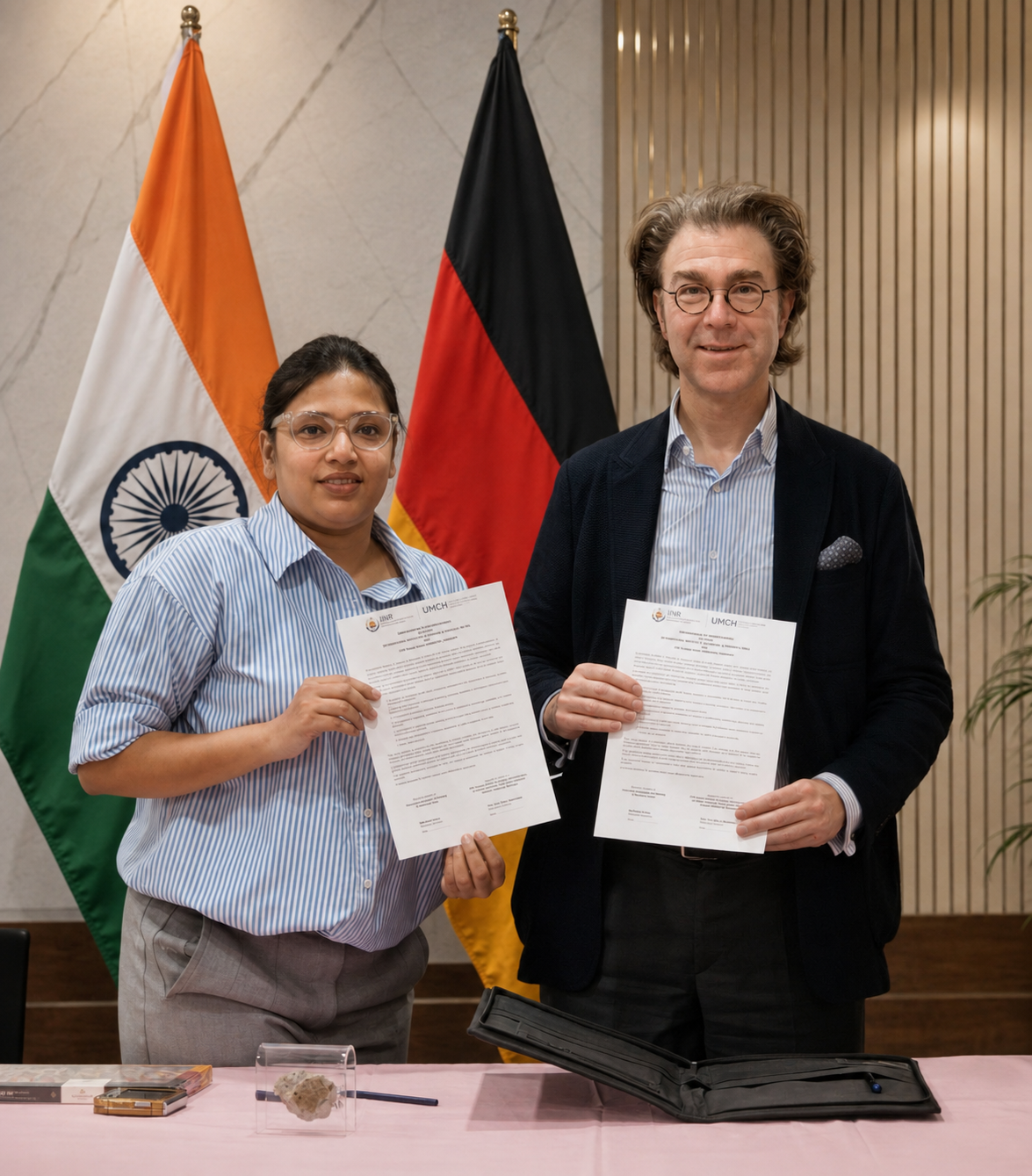
Germany faces a structural shortage of qualified nursing professionals. India trains them in large numbers but has lacked the language, regulatory and cultural bridges for orderly, ethical mobility. We set out to build that bridge institution to institution, rather than through intermediaries.
Future Nurses, Germany — Prof. Dirk U. Naumann,
Managing Director.
CPE Europe GmbH, Hamburg — in association with UMCH
(Universitätsmedizin Neumarkt a.M. Campus Hamburg).
IINR and Future Nurses, Germany, at the Kalyani campus.
First joint programming between the institutions begins.
Introduced into the nursing curriculum at IINR.
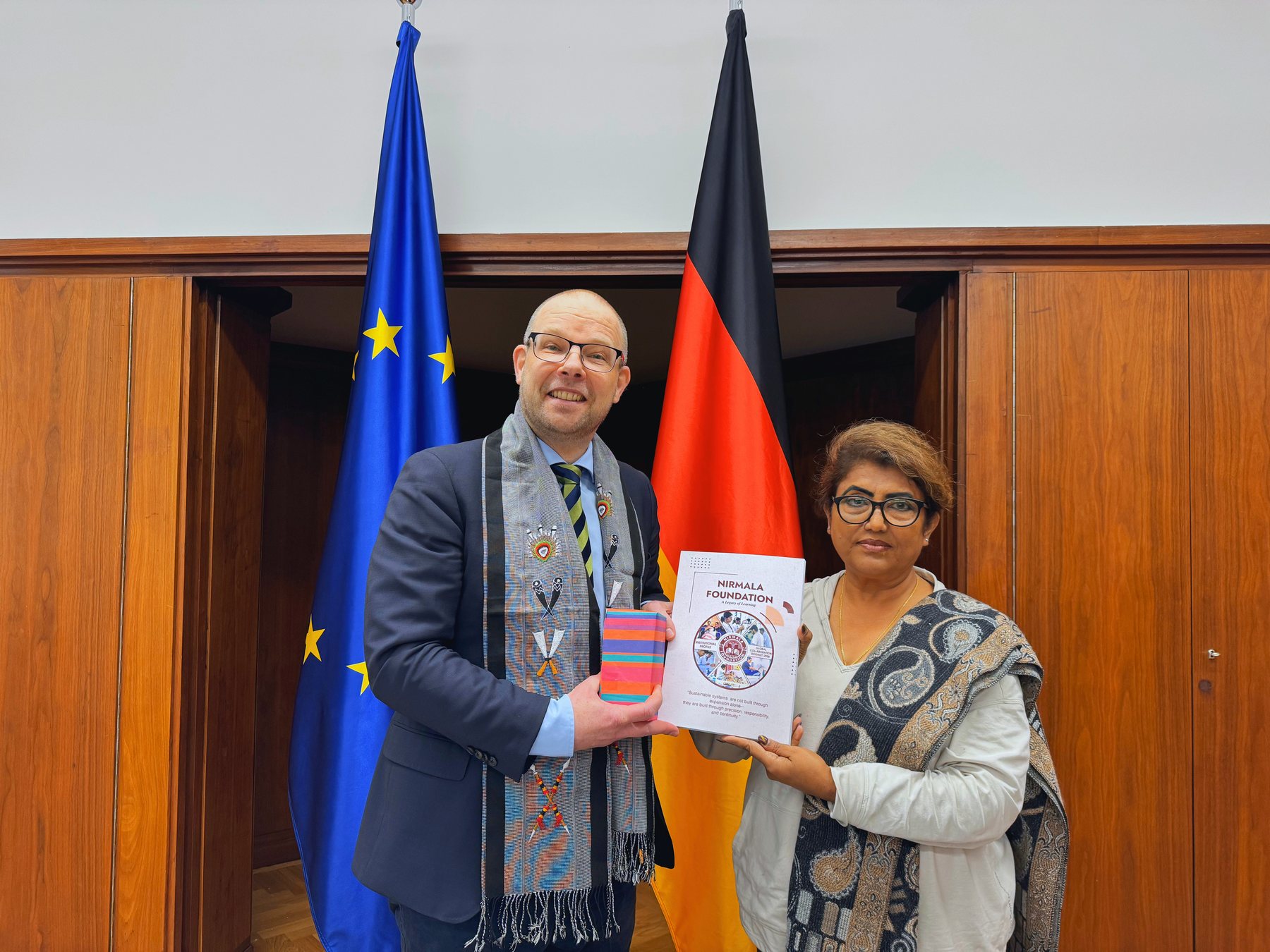
Institutional profile and roadmap presented to German counterparts.
Partnership presented; new institutional partners invited.
Faculty exchange, joint CME, dual-recognition curricula, collaborative research.
Ecosystem
Most healthcare education groups are a collection of colleges. Ours is a chain. Select a stage to see what it contributes — and where a partner can enter.
Group-wide and indicative. Verified institution-level data is in the Capability Statement.
Credentials
Education, clinical care and research under one governance structure — no coordination overhead between separate entities.
Students train inside the group's own 450+ bed teaching hospital from early in the programme, not through third-party placements.
4,500+ students in training at any time across medicine, nursing, pharmacy and hospital administration.
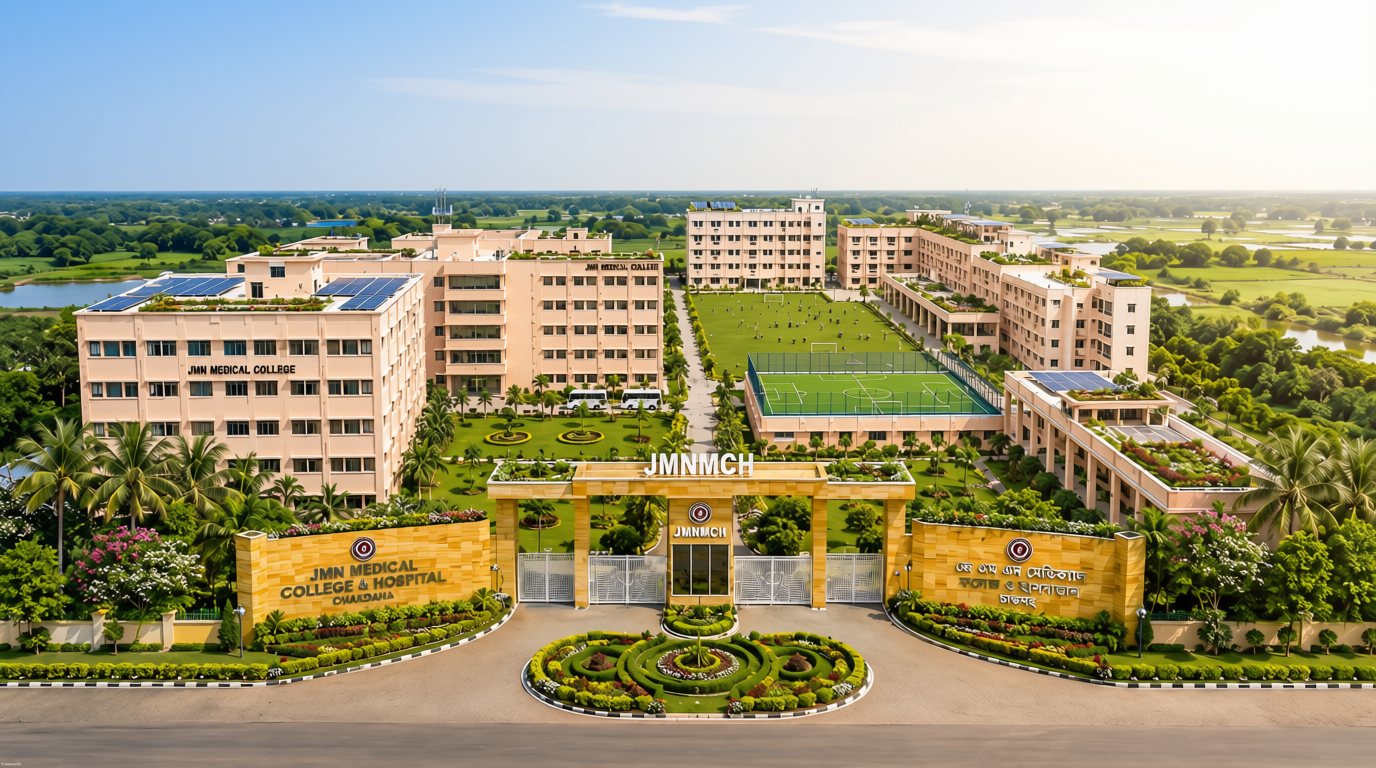
A 76-acre campus, simulation and skills laboratories, smart classrooms and 24-hour library access.
Clinical, academic and legal expertise, with direct experience of negotiating and executing international institutional agreements.
Every programme regulated. NAAC accreditation at institutional level, with an active internal quality assurance cell.
Active German MoUs and a dedicated International Relations Office that manages partnerships end to end.
Education access for underserved communities, and multi-speciality hospital services in districts that previously had none.
Workforce Development
The section that matters most to our German partners, set out plainly. Every element below is part of the standard programme, not an add-on.
Rotations inside a 450+ bed multi-speciality teaching hospital and a 100+ bed general hospital, from early in the programme.
Structured competency progression with practical assessment at each stage, alongside certified short modules.
Dedicated nursing, obstetric, paediatric and nutrition labs for scenario-based practice before patient contact.
German language pathway delivered with our German counterparts for students on the international track — the decisive factor in successful placement.
Formal ethics teaching, anti-ragging and grievance frameworks, and a code of conduct applied consistently across all institutions.
Orientation to the German health system and comparative healthcare modules — a standing part of the curriculum since December 2025.
Research is the youngest part of this ecosystem. Faculty publish across nursing, community health and allied health sciences, we run an in-house nursing journal, and clinical and community studies operate through the teaching hospitals. Patents and international collaborative projects are early-stage. We have the patient volume, the student cohort and the clinical infrastructure — what we are seeking is methodological partnership.
Collaborate
We welcome universities, teaching hospitals, nursing and training institutions, healthcare providers, medical technology companies, pharmaceutical organisations, research institutions and professional associations.
People
Partnership conversations are held at leadership level, not delegated to an agency.
Schedule a Visit
We host institutional delegations, campus visits and exploratory discussions throughout the year. Tell us what you would like to see and we will build the programme around it.